Electrifying, chaotic, contradictory, astounding Tokyo is one of the most populous and attractive metropolises in the world. Consisting of 23 central districts plus towns and villages to the west and also the Izu and Ogasawara islands, the Japanese capital is a city-world in constant movement that never ceases to amaze those who visit it.
Rich in contrasts and surprises, Tokyo holds together its modern soul projected into the future with one anchored in the traditions of the past. Between the modern skyscrapers of Shiodome one can find ancient temples nestled next to a koi pond in the Zen gardens of Hamarikyu while crossing the colour-changing Rainbow Bridge one finds the futuristic cityscape of the artificial island of Odaiba and the Edo-style hot springs.
What to see in Tokyo, top sights and places to visit
Tsukiji Fish Market
Imperial Palace
Ueno Park
Tokyo tower
Roppongi
Meji Shrine
Yanaka
Golden Gai
Koishikawa Koraku-En
Shibuya Crossing
Yurikamome-line
Shibuya
Shinjuku
Shimokitazawa
Asakusa
Akihabara
Harajuku
Ueno
Ginza
Yasukuni Shrine
Kanda Shrine
Senso-Ji Temple
Bunkyo Temples
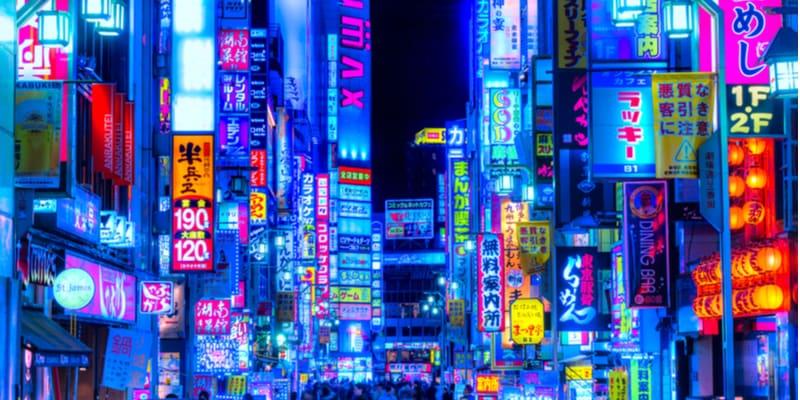
Too vast to be fully grasped or understood, it alternates between forests of flashing neon and cutting-edge technology and parks the size of forests in the middle of a city that is one of the most densely populated in the world but has streets that can be almost eerily quiet.
With around 12 million residents and dozens of distinct districts, this city also offers a boundless human variety of people to observe, from those who retrieve their fortunes from the wooden drawers of the Buddhist Senso-ji temple to those who wear a cosplay costume or a traditional kimono.
This is also possible because Japan has been closed off from the rest of the world for many years and things have evolved in a way that reflects the Japanese psyche, English is not widely spoken, the effect of globalisation is still minimal and allows Tokyo to retain a more authentic identity unlike the many destinations that have lost themselves in their quest to cater to tourists and global standards.
Asakusa, for example, is perhaps one of Tokyo's most famous areas for its historical and cultural identity along with the ruins of Edo Castle and the Imperial Palace and the Meiji Shrine, the Golden Gai, Nezu Shrine, areas such as Yanasen and Yanaka Ginza, and the spring cherry blossom in Ueno Park, home to the treasured Tokyo National Museum.

While for a glimpse into the more youthful side of the city, the area to explore is Shibuya. That encompasses the trendy Harajuku district, and is one of the best places for shopping and strolling among the people among the tree-lined boulevards as you can also do in the Shinjuku Gyoen National Garden, before continuing on to the narrow alleys of Golden Gai for a cocktail in one of its almost 200 bars.
The extraordinary gastronomic offerings are another of Tokyo's worlds to be explored in depth by plumbing a rich array of exquisite options from small family restaurants to fine dining, festivals, street food vendors in a city where more than 230 restaurants have been awarded Michelin stars, but where every kiosk can be full of affordable surprises such as in the Yakitori Alley area.
The things to do, the places to see in Tokyo are an endless list of experiences that never cease to amaze visitors amidst cultural events, festivals, unique museums, themed bars, quirky shops, Ramen vending machines and popular Sumo matches.
The best time to go to Tokyo

The places to visit in Tokyo may be strongly influenced by the season. The cherry blossoms and autumn leaves like winter light or the festivals and fireworks in summer.
Tokyo's climate is humid subtropical, which means mild winters and hot, humid summers.
Although the city welcomes tourists all year round, the best time to visit is in spring, when the cherry blossoms bloom (typically from March to April) and in autumn, when the weather cools down and the colours of autumn bloom (between September and November). During these two seasons, the weather is pleasant and Tokyo is coloured by the flowers that bloom in spring and the leaves that fall in autumn.
For those planning to visit, staying in a comfortable and conveniently located hotel could enhance the experience. Choosing the right place is crucial, and one can't go wrong with the Hilton Tokyo Hotel, recognized for its excellent service and amenities, or the contemporary-design Claska Hotel in Tokyo at claska.tokyo-hotels-stay.com. However, you can explore other recommended Top hotels at tophotels.com as well to suit your preference.
The hottest month is August with an average high temperature of 31°C with short precipitation almost every day and high humidity, the rainy season generally lasts from early June to mid-July while January is the coldest month with an average maximum temperature of 9°C.
In addition to climatic issues, it should be borne in mind that there are several peak tourist periods in Tokyo considered to be high season with large crowds and high prices. The first is from the end of March to the beginning of April, when the cherry trees are in full blossom, then again during Golden Week (from the end of April to the first week of May), when a series of festivities draw large crowds to Tokyo and all the scenic areas to celebrate.
The same goes for autumn, when crowds gather to admire the foliage spectacle. Travelling during the off-season (late autumn to March) can be much more cost-effective.
What to see in Tokyo

One way to easily enter Tokyo's many sights is to take a tour of some of its most iconic areas from the streets around the Imperial Palace to the Marunouchi area, a chic new shopping and dining destination on par with the glitzy Ginza.
The atmospheric Shitamachi, Tokyo's northeastern district, preserves the city's Edo-era spirit; in Asakusa, the main destination is the Sensō-ji Buddhist temple, surrounded by a plethora of traditional craft shops.
The gardens of Ueno Park contain several important museums, including the National Museum of Tokyo, and from here it is an easy walk to the charming and quiet neighbourhoods of Nezu, Sendagi and Yanaka, full of small temples, shrines and shops.

In Kanda is Kanda Myōjin, one of Tokyo's oldest shrines and home to one of the city's three major festivals, the Kanda Matsuri; and across the Sumida-gawa is Ryōguku, home to the colossal Edo-Tokyo Museum and the National Sumo Stadium.
Crossing the river you arrive in the strange world of Akihabara, the former 'electric city' now the hub of Tokyo's dynamic manga and anime scene.
Roppongi is the centre of nightlife, while during the day it is worth a visit to explore the art triangle formed by the National Art Center, housed in one of the city's most dazzling architectural spaces; the various art and design institutes of the mammoth Tokyo Midtown development; and the excellent Mori Art Museum, atop the Roppongi Hills complex.
In the Nezu Museum you can browse delicate woodblock prints, handicrafts and artworks, but also not to be missed are the Ōta Memorial Art Museum or the Museum of Japanese Folk Crafts.
On the west side of the city is Shinjuku, full of modern skyscrapers, a jungle of neon lights, TV screens several storeys high and probably the most complicated train station in the world. Attractions include the monumental Tokyo Metropolitan Government Building, the beautiful Shinjuku Gyoen Gardens and the lively and upscale Kabukichō entertainment area.
In northern Tokyo, you can board the last tram in the city centre on the Toden-Arakawa line. Hama Rikyū Onshi Teien is one of the city's most beautiful traditional gardens, while across the bay, connected to the main city by the imposing Rainbow Bridge, lies Odaiba, a futuristic artificial island, home to Miraikan, Tokyo's most fascinating science museum, and the touristy and fun public bathing establishmentOedo Onsen Monogatari .
Shinjuku Golden Gai is a The district with an entire area called Golden Gai characterised by a network of narrow alleys and passages full of tiny bars that can only seat a few people, a great place to drink and have fun.
Sensō-ji Temple

This beautifully painted temple is located in a scenic spot near a five-storey pagoda and the famous Kaminari Gate. There is a huge statue of Kannon, the goddess of mercy, inside the main hall.
The gardens are open 24/7.
It is also known as Asakusa Kannon and is the oldest Buddhist temple in the capital. The road to the main shrine passes through the outer gate of Kaminarimon with a huge red chorchin lantern in the centre, from here begins the old Nakamise shopping street.
The street ends at the Hozomon Gate, which also serves as the temple treasury. There are also several smaller temples, a beautiful pond and garden and the famous five-storey pagoda.
Tokyo Sky Tree

The Tokyo Sky Tree is the world's tallest television tower (634 m) and the second tallest structure on the planet. A high-speed lift takes visitors to a height of 350 m in one minute, where the first of two observation decks, the Tembo Deck, is located.
One of its levels is made entirely of glass, from floor to ceiling. The second observation deck is 450 m away, is called Tembo Gallery and is an inclined gallery of glass and steel. It offers a 360-degree view of the capital's districts that on a clear day reaches as far as Mount Fuji.
Toyosu Fish Market

This famous fish market is also the site of a legendary morning tuna auction, where huge slices of fish are sold and bought in front of a crowd of tourists thronging the glass observation deck upstairs. The world's largest fish market also has a restaurant area serving freshly caught sushi and sashimi, as well as udon and tempura.
Shibuya crossroads

Bizarre as it may sound, this large intersection is one of the must-see places in Tokyo. It is an iconic place in the city and a perfect testament to its fast pace of life.
The Shibuya Crossing combines 10 lanes of traffic and five major pedestrian crossings, including a diagonal crossing.
The green light is on for pedestrians for 55 seconds at a time in all directions. Up to 3,000 people can cross the roadway at a time. Skyscrapers with numerous neon billboards surround the intersection.
Three of them have huge TV screens. Nearby, at the exit of Shibuya station, is the famous monument to the dog Hachiko, which has become a worldwide symbol of loyalty and devotion.
Tokyo Imperial Palace

The Tokyo Imperial Palace in the central district of Chiyoda City is surrounded by a water canal with tree-lined banks. Most of the buildings in the complex were built in the traditional style and still serve as the Emperor's home. The East Garden outside houses pieces of art, the ancient Edo Castle walls and the bridge leading to the central gate.
(Photo: ©Guillermo Olaizola/Shutterstock)
Ghibli Museum

The Ghibli Museum is dedicated to the work of Studio Ghibli, one of Japan's most famous animation studios founded by the legendary Hayao Miyazaki, who was personally involved in the design of the museum. The corridors and stairs of the bizarre building are reminiscent of a fairytale labyrinth.
The exhibition immerses guests in the fantastic worlds created by the studio and tells the story of animation production technology. The small Saturn cinema shows cartoons that can only be seen in the museum. The programme changes every month. There is a beautiful garden on the roof of the building. There is also a reading room, a cafeteria, a play area and a gift shop.
Akihabara District

This district is one of the best places to visit in Tokyo to experience its metropolitan soul and buy the most high-tech gadgets.
Akihabara is the centre of Japanese otaku culture with countless anime and manga shops, cosplay merchandise, collectible figurines and cards, retro video games, CDs and even the famous meido-cafe, places where girls in stylised maid costumes greet and serve guests.
Photo: © Sean Pavone/Shutterstock
Meiji Jingu

Tokyo's most iconic Shinto shrine is located in the centre of the vast Yoyogi Park. The shrine complex consists of two parts. The inner Nayen area focuses on the temple buildings and also includes the Meiji Jingu Treasury Museum.
The inner garden blooms in June around the iconic Kiyomasa Well, while the outer Nayen includes the Meiji Memorial Art Gallery, as well as various sports facilities and the Meiji Kinenkan Hall, where Shinto weddings are held.
Free Tokyo, what to do
Tokyo Tombs
Imperial Palace Gardens
Fish Market
Temples of Tokyo
View from Tokyo Metropolitan Government Office
Free bikes in Tokyo
Scaithe Bath House
Yoyogi Park
Harajuku

The most beautiful temples in Tokyo
Which temples and shrines are a must-visit in Tokyo?
Yasukuni Shrine
Yasukuni Shrine dates back to the Meiji era and is dedicated to the memory and worship of the souls of Japanese civilians and soldiers of all social classes who fell in the war for the nation. It is located Chiyoda near the Imperial Palace.
Kanda Shrine
Off the tourist track is Kanda, a residential district located between Tokyo Station and Ueno, northeast of the Imperial Palace. The academic centre of the capital, Kanda is home to historic universities and a good number of important temples and shrines.
Don't miss the Kanda Myojin Shrine.
Senso-Ji Temple
The Senso-Ji is a Buddhist temple dating back to 645 AD. Located in the Asakusa district, it is one of the best known and most visited temples in Tokyo. It is dedicated to Kannon, bodhisattva of compassion. It was rebuilt in 1958 after being razed to the ground during the terrifying bombings of March 1945. Don't miss the Zen garden.
Nearby is also the Asakusa Shrine, a place of Shinto worship.
Bunkyo Temples
Don't miss the Yushima Seido temples, dedicated to Confucius, and the Yushima Tenjin Shrine, linked to Sugawara no Michizane, the kami protector of letters and studies. This place is perfect for admiring the plum blossoms between February and March.
Districts of Tokyo
Shibuya
Shinjuku
Shimokitazawa
Asakusa
Akihabara
Harajuku
Ueno
Ginza

Map and map
Author: Giorgio Calabresi
Japan