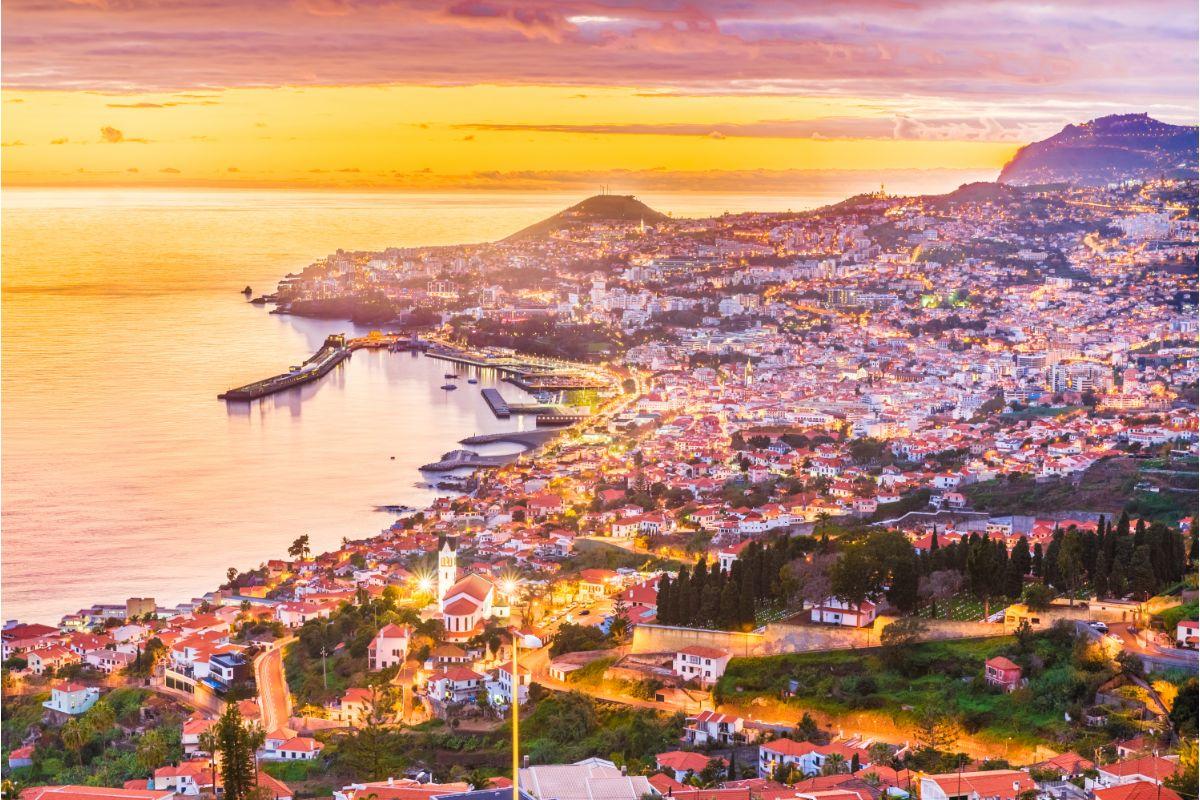
Are you already asking yourself the question "what to do in Lisbon"? We'll give you a straight answer and guarantee that Lisbon is one of the greatest cities on the planet. Don't believe us? It won't take long for the city to change your mind. It all starts with the aesthetics, and Lisbon offers more beauty than you can imagine. Add to that a conveyor belt of world-class restaurants, Portugal's best hotels and an uncanny ability to be stylish at all times, and you've got a life-changer.
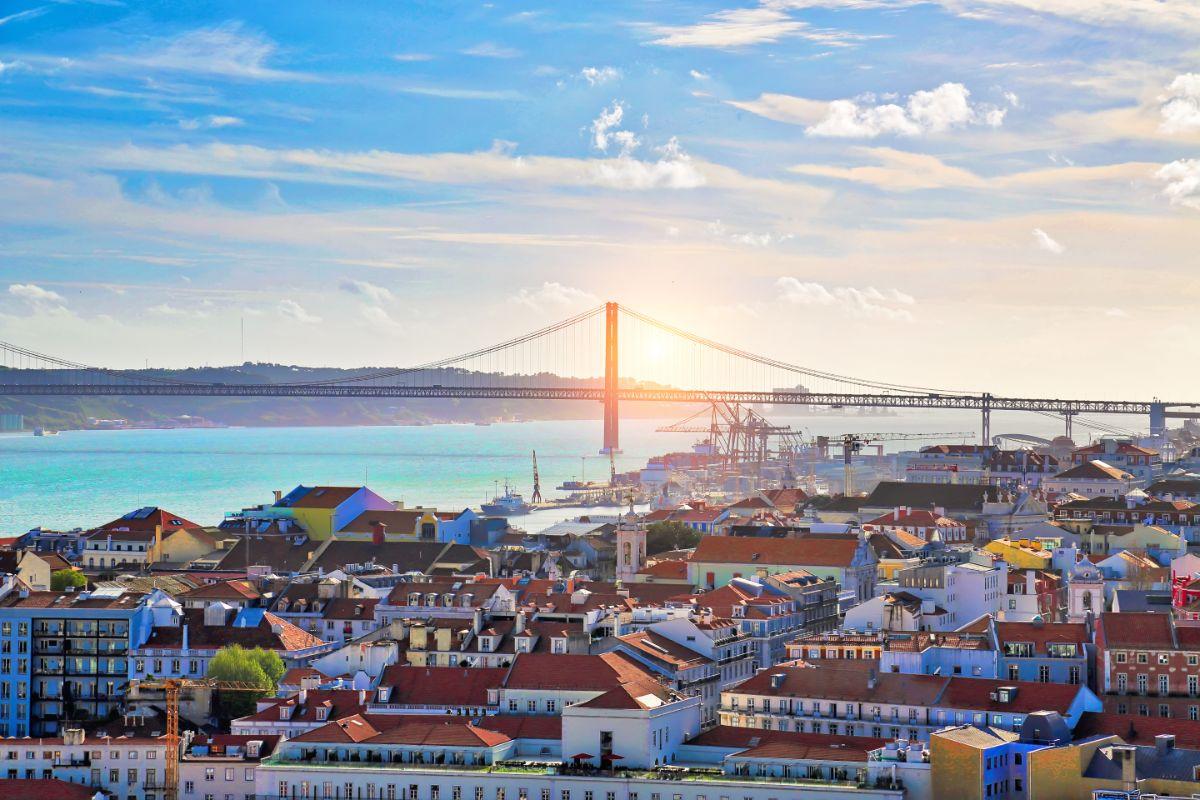
Therefore, the best things to do in Lisbon can be read as a collection of the best things to do in life by way of beautiful museums, amazing streets, food, more. Lisbon's trendiest neighbourhoods have a lot to offer.
But first, let's take a look at a few interesting facts before moving on to the crème de la crème!
Map of Lisbon

Monuments and architecture
The hilly capital of Portugal, the coastal city of Lisbon is Europe's westernmost capital. Colourful and historic, the city is teeming with life in every corner, and every person and structure has a story to tell that will reveal the secrets of Portugal's vibrant culture, and Lisbon's monuments make it all the more attractive.
Lisbon's culture and history blend with contemporary urban life and cosmopolitan nature in a unique way to produce one of the most interesting experiences in Western Europe.
Lisbon's hilltop is crowned by the magnificent San Jorge Castle, which boasts elegant European architecture and is a source of pride for all the city's inhabitants. The Belem Tower and the Jeronimos Monastery are further examples of the wonderful architecture to be found throughout the city. The National Azulejo Museum and the Calouste Gulbenkian Museum Complex are perfect for witnessing the evolution of Portuguese history, culture and art.
Where to stay in lisbon
Despite its status as a major European capital, Lisbon remains a city where you can find cheap accommodation.
Public youth hostels (pousadas da juventude)

To stay in official youth hostels, a membership card is often required, but there is no age limit. Prices are still very reasonable for a quality offer. The rooms are spotless and the establishments are fairly well-equipped, functional if not welcoming.
There are 2 official youth hostels in Lisbon: one near the Parc des Nations and another in the northern quarter, not too far from the Gulbenkian Museum (recently closed). In both cases, the hostels are much more central!
Hostels (private youth hostels)
Alongside these official hostels, there has been a resurgence of private hostels in Lisbon, the quality of which is breathtaking! In beautiful flats in the city centre, houses, personalised, warm and comfortable nests. They are clean and often designed by young artists.
No cards are required. Prices are a little higher than in the official hostels, but often very, very reasonable.
These hostels offer 2 types of accommodation:
On the one hand, dormitories with shared toilets and bathrooms, lockers, a personal light for each bed and, often, an individual socket for recharging appliances (very practical), all more suitable for young backpackers;
On the other hand, double or even family rooms are suitable for all types of clientele;
Homestays and guesthouses
Bed and breakfast accommodation is available just about everywhere, especially in the city centre. You'll either be asked in the street, or there will be signs saying "alugam-se quartos", or the tourist office will point them out to you. In general, they're pretty cheap. Guesthouses and Bed & Breakfasts have also flourished in Lisbon over the last ten years, with some very good addresses, mainly on the outskirts of the centre.
Pousadas
The pousada is the Portuguese equivalent of the Spanish parador: a chic establishment (run by the State), set either in a historic monument or in a recent building that is enhanced by its exceptional location.
The pousadas.pt website lists all the country's pousadas. Prices vary considerably depending on the category of establishment and the season. Book as far in advance as possible.
Note that with the crisis, some pousadas have recently closed their doors or have taken a few wrinkles...
Gastronomy
From grilled sardines to pastéis de Belém (cream pies), Lisbon's cuisine is as attractive as the city and the region itself.

Sardines in Lisbon
Grilled sardines are popular throughout Portugal, but in Lisbon they are particularly traditional during the popular saints' festivals in June. Accompanied by grilled peppers and seasoned with the excellent Portuguese olive oil, they are an obligatory dish in any typical restaurant or on a beach terrace, especially in summer.
But the boats that colour the region's fishing ports - Ericeira, Cascais, Sesimbra and Setúbal - bring plenty of other fish and seafood for succulent bouillabaisses, fish soups or simple grills, such as Setúbal red mullet and fried cuttlefish.
Sweets in Lisbon
As for sweets, there are plenty to tempt you around the capital, and they alone justify the trip: nuts in Cascais, at the tip of the seductive Estoril coast; queijadas (cheese tarts) and travesseiros (egg and almond pastries) in Sintra, and fofos (cream-filled sponge cakes) in Belas, Sintra's verdant cultural landscape, dotted with palaces and a UNESCO World Heritage Site; when you cross the Tagus to the south, you'll find the tortas d'Azeitão (rolls filled with egg cream). There are countless sweet treats, but there's one that no one can miss on a visit to Lisbon: in the monumental district of Belém, home to two World Heritage sites, you absolutely must try the pastéis de Belém, a convent confectionery speciality that is a trademark of Portuguese gastronomy.
35 must-do activities and visits
Marvel at the Tower of Belém

If there's only one landmark to visit when touring the Portuguese capital, this is it.
Overlooking the waterfront of Lisbon's quays, this great tower is a veritable fusion of architectural styles, from Mudejar to Moorish, Gothic to Romanesque.
It has watched over the mouth of the Tagus since it was built under the patronage of Saint John in the 16th century.
Since then, it has become the city's most emblematic landmark, famous for being the last sight adventurers like the prodigal Vasco da Gama would have seen before drifting into the vast Atlantic Ocean.
Read also: Visiting the Belém Tower in Lisbon: What you need to know
Take the Tram 28

Like San Francisco in the United States, Lisbon is a city famous for its historic and noisy tram lines.
None is more iconic than the Tram 28, which has been making its way along steep cobbled roads to the old Alfama district for decades.
The journey begins beneath the palm-covered hills of Graça and winds its way through the hairpin alleys of Escolas Gerais, before stopping beneath the magnificent domes of the Estrela Basilica.
The people-watching opportunities from the windows are unrivalled, and you're sure to discover decades of history as you pass the various majestic palaces and castles along the way.
Wander around the Alfama district

The small, compact Alfama district is Lisbon's answer to the city centres of other ancient European capitals.
Like Rome's Forum, it is considered to be the oldest part of the city, although it dates back to the Moors of Africa rather than the kings of Lazio.
Immersing yourself in the maze of winding streets and alleys that make up the district is one of the main activities for visitors to the Portuguese capital.
As you stroll along, great cathedrals like Lisbon Cathedral and chapels with tiled facades come into view.
There are also the remains of the city's ancient ramparts and hidden squares where al fresco cafés abound.
Take a trip to Sintra

"Have you been to Sintra?" is the usual question asked by regular visitors to the Portuguese capital.
Although it's a completely different town and more than half an hour's drive from Lisbon, the glorious town of Sintra remains one of the capital's main attractions.
Day trips are common, while others will want to spend two days exploring this UNESCO World Heritage Site.
Set amid the mythical Mountains of the Moon, it boasts elegant Baroque churches, colourful manor houses and the grand palaces of Portugal's former kings and queens.
See also
15 fabulous things to do in Sintra
Visit the National Palace of Sintra, the not-to-be-missed guide!
The National Palace of Pena, one of the 7 Wonders of Portugal!
Enjoy the azulejos at the National Tile Museum

Ask any ceramics enthusiast and they'll tell you that Portugal is the place to go to find tiles.
Lisbon's great National Tile Museum is devoted to all things kiln-fired.
The institution traces the important history of tile making and associated technologies from the time the Moors introduced it to the Iberian Peninsula.
Of course, the best part of all the exhibits is the blue azulejos.
These famous ceramic works of art have given the country its reputation for expertise in this field.
You can see every type, size and model, and learn about the evolution of the enchanting designs that adorn their cobalt surfaces.
Read also: The must-see 12 best museums in Portugal
Conquer the ramparts of St George's Castle

St George's Castle is undoubtedly the most visible landmark in Lisbon's historic centre.
Standing tall and firm above the streets of the old Alfama district, the great citadel was built over 2,000 years ago by the Romans.
Since then, it has been developed by successive rulers of the city, from the Berbers to the knights of the Reconquista.
Today, you can admire powerful palisades and crenellated towers, as well as dry moats and other anti-siege features.
Pass under the great gate and notice the Portuguese royal seal, which marks the monarchic strength of the country.
Trace glorious history at the Hieronymites monastery

One look at the ornate spires and grandiose sculptures of the great Hieronymites monastery should be enough to deduce the raison d'être of this massive monument nestling near the banks of the Tagus.
It was built to mark Portugal's most glorious age, known as the "Age of Exploration". The fusion of architectural designs, known as the Manueline style, bears witness to the cultures encountered by Lisbon's explorers, while the money used to build the structure came from the international trade in cloves, cumin and exotic spices from Portugal.
It is also another of the city's UNESCO World Heritage sites.
Explore São Jorge Castle

Located on Lisbon's highest hill, the Lisbon Castle is one of the city's most emblematic monuments. It offers breathtaking views of the capital, and there's a lot to learn from a visit here. The castle was invaded by the first king of Portugal, D. Alfonso Henriques, in 1147, and the king made it his home.
Read also: Saint George's Castle Lisbon, the must-see guide 2023
Venture underwater at the Oceanarium

Set in the blue waters of the Tagus estuary, Lisbon's huge oceanarium stands like an aircraft carrier.
The building houses exhibitions on marine life.
You can get up close to colourful puffer fish and watch marauding sharks.
You'll see curious moray eels and meet cuddly penguins.
There are also interesting collections of sea anemones and corals, not to mention an artificial boating lagoon at the front where you can hire a pedalo if the weather is fine.
Admire the masterpieces of the National Museum of Ancient Art
The National Museum of Ancient Art houses Portugal's prestigious national art collection.
The pieces on display range from Nuno Gonçalves' depictions of pious saints to Josefa de Óbidos' chiaroscuro portraits.
Most of the paintings date from the sixteenth to the nineteenth centuries and came into public ownership after the liberal wars that shook the country in the early modern era.
Visitors can also enjoy countless travelling exhibitions, with past collections reflecting Renaissance Lisbon and historical paintings from the Age of Discovery.
Explore the Orient at the Museu do Oriente

You only have to set foot in places like Sri Lanka and Goa to realise the extent of the Portuguese Renaissance empire.
These far-flung eastern reaches of the kingdom are the subject of Lisbon's Museu do Oriente, and the space itself is immense.
It is housed in a colossal former fish processing factory, which now boasts modern exhibition rooms.
The emphasis is on all things Asian, with stories of Chinese rituals and sailing in the South China Sea all part of the tour.
Ride the funiculars

Lisbon, like Rome, was built on seven hills.
Unlike Rome, the city planners developed a series of funicular railways to facilitate transport to and from the districts above the city.
It's a real pleasure to ride some of these routes, such as the old Ascensor do Lavra, which dates back to the late 1800s and has been honoured with a national heritage label.
There's also the Ascensor da Bica, which winds through the narrow cobbled streets of Largo do Calhariz.
And let's not forget the Santa Justa lift, which transports people from Baixa to Carmo and offers breathtaking views of Lisbon city centre.
Enjoy the Mercado da Ribeira
Lisbon's most famous food market has two distinct aspects.
Firstly, there's the lower section, which is teeming with local fruit and veg vendors touting succulent pulses and Mediterranean fruit every weekday morning, so make sure you get there early if you want the best deals.
Then there's the upper section, which is filled with more modern, often quirky food stalls and state-of-the-art restaurants.
This is where you can sample the local speciality of cream pies, which is one of Porto's northern delights.
Watch the people on Rossio

Rossio Square, dotted with plane trees, is where Lisbon's local life comes alive every day.
Officially known as Pedro IV Square, the place marks the very heart of the lower city of Lisbon, which stretches out in wide boulevards between the Tagus and the Baixa.
The site of the square itself has been famous since medieval times, when public beheadings and bullfights took place on its cobbles.
Today, it's a great place to stroll and people-watch.
You can relax on the shady benches, watch the locals play dominoes in the park and admire the elaborate baroque fountains chirping in the sunshine.
Visit the modern Berardo Collection Museum

The Berardo Collection Museum is the most modern of Lisbon's world-class museums and exhibition spaces.
This enormous institution now attracts more than 2.5 million visitors every year.
They come to marvel at the buffet of eclectic works of art, ranging from abstract expressionism and neo-realism to photography and digital art installations.
The curators strive to keep the collections cutting-edge, so there are also regular touring collections. So you can expect to see pieces from the French avant-garde and European cubism.
Surf the waves in Caxias
Grab a board, wax it and don a wetsuit, as the waters where the Tagus estuary meets the Atlantic Ocean can be pretty cold.
Just west of the centre of Lisbon, this is where most of the capital's wave enthusiasts retire at the weekend.
There are challenging breaks left and right, and many tour operators offer surf lessons on the swells, which is perfect if you're a complete beginner looking to escape the city for its beaches.
Find your inner explorer at Padrão dos Descobrimentos

Now a historic monument in its own right, the Padrão dos Descobrimentos marks the shore of the Tagus estuary with its grand architecture and beige stonework.
It has stood here since the early 1960s and is an ornate testament to the successes of Portuguese exploration during the Age of Discovery.
You can reach the imposing monument by strolling along the bank of Santa Maria de Belém.
Once you've spotted it, be sure to spot the legendary figures of Vasco da Gama (explorer of India and Arabia) and Prince Henry the Navigator (adventurer of the Great Sand Sea).
Discover the city's past at the Lisboa Story Centre
This institution, which is free to all Lisbon city card holders, traces the Portuguese capital's past from its earliest years to the present day.
Special sections are devoted to the age of exploration and the great navigators who left the city.
Also not to be missed is a particularly enlightening article on the terrible earthquake of 1755.
Stroll through the Royal Gardens of the Palace of the Marquises of Fronteira

In the far north-west of the city, dating from 1681 and located on the outskirts of Lisbon, the grand palace of the Marquises of Fronteira is one of the most remote remnants of the city's former glory.
Despite its remote location, it is easy to get to and offers a glimpse of the majestic architecture that took hold in Portugal in the 1600s and 1700s.
The house was once the home of the Marquis of Fronteira, who received his lands and wealth after remaining loyal to the Portuguese royal name during the War of Restoration in the mid-seventeenth century.
Revel in Tróia's natural beauty
You'll have to cross the Tagus and Sado estuaries to reach the sparkling beaches of the Tróia peninsula.
However, the two-hour journey is well worth it.
Stretching for miles along the Atlantic coast, the area boasts some of the best seafronts in the whole of the Lower Alentejo.
The sand glistens a soft yellow in the sunshine and the sea is surprisingly calm for this western part of the country.
The magnificent Parque Natural da Arrábida can be seen on the headlands opposite, and regular excursions leave from Tróia to watch bottlenose dolphins at sea.
Go to the beach on the Costa da Caparica

Speaking of beaches, just cross the Ponte de Abril over the Tagus to reach the popular and renowned summer resort of Costa da Caparica.
Located on the northern outskirts of the district of Sétubal, it offers unrivalled access to some of the best sandy spots within easy reach of the capital.
You're sure to discover empty stretches of dunes covered in acacia trees and swaying seagrass, all bathed in stimulating surf.
The busiest beaches are close to the town, while a narrow-gauge railway takes travellers to secluded coves and sunbathing spots further along the coast.
Enjoy the sun and delicious seafood in Cascais
If you need a dose of idyllic scenery after the hustle and bustle of Lisbon city centre, there's probably no better place to go than perfect Cascais.
This former hamlet on the shores of the Atlantic Ocean lies to the west of the city and has been transformed over the years by an influx of upmarket Lisboans in search of sun, sea and sand.
There are no fewer than three golden cliffside bays, as well as some of the best seafood restaurants in the region.
If you're a wave-lover, consider heading to Guincho, along the promontory, where the swell is strong.
Read also: What to do in Cascais, Portugal's fairytale destination
Haggle at the Feira da Ladra

Practice your haggling skills on a trip to Feira da Ladra, as this sprawling weekday and weekend market is the place to find quirky, curious and often downright bizarre knick-knacks and antiques.
Believe it or not, the history of this buzzing bazaar dates back to the 12th century, when you can almost imagine a similar collection of gypsy traders and motley talisman sellers congregating on the pavements of the Campo de Santa Clara.
In the square next to the National Pantheon, the Feira da Ladra flea market takes place twice a week (Tue and Sat) and has the reputation of being known as the thieves' market.
Despite the enticing stories that the market is filled to the brim with stolen goods, the name actually comes from ladro, which refers to an insect found in antiques.
Nevertheless, it's one of the best free things to do in Lisbon. The market sells everything you'll never need: old rotary phones, broken mannequins and used vinyl. There are also lots of handicrafts, CDs, military artefacts and granny's old furniture. Tourist prices tend to creep up, so practise your bargaining skills.
Have lunch at one of the tables overlooking the market for a unique experience in downtown Lisbon. Even if you're not there on market day, the restaurants lining the square have a traditional Portuguese feel.
You'll need to arrive early if you want a chance of catching something worthwhile, and you can even get to the market on the historic tram 28.
Admire the Aqueduto das Águas Livres

This impressive expanse of stone arches and Italian architecture was created in the mid-18th century.
The monument was designed to remedy Lisbon's perpetual summer water shortages, and was built to fit in perfectly with the Gothic revival of the city itself.
Be sure to take a look at the section of the aqueduct that runs directly over the rooftops of the Amoreiras district, then head to the Water Museum, which traces the evolution of this masterpiece.
Discover the Basílica da Estrela

You'll certainly have caught a glimpse of the magnificent domes and spires of the Basílica da Estrela when you stepped off the noisy carriages of tram 28. It's worth lingering a while beneath the whitewashed facades of this iconic church and convent, as many visitors consider it one of the most beautiful in Lisbon.
Baroque design dominates the exterior, with a pair of sculpted spires piercing the sky.
The interior, meanwhile, reveals a kaleidoscope of coloured stone inlays and even the tomb of Queen Maria I of Portugal.
Enjoy even more exceptional views of Lisbon

As we've already mentioned, there are countless stunning viewpoints throughout Lisbon. If you're looking for places that are a little more local and want to get off the beaten track, check out the Miradouro São Pedro de Alcantara in the Bairro Alto district and the Miradouro de Santa Catarina, which isn't far from the Time Out Market.
The Miradouro São Pedro de Alcantara has a lovely little park and offers a breathtaking view of the city, unlike most of the other viewpoints mentioned above. From here, you can see the castle, the Praça do Comércio and the church of São Vincente de Fora. The best way to get there is to take the Funiculario de Gloria from Plaça Restadaures.
The Miradouro Santa Catarina is one of the best places to watch the sunset in Lisbon! It is much closer to the water and offers an incredible view of the Tagus and the bridge. The area has recently been renovated and is a favourite sunset spot for many locals. In the middle of the square is a statue of the famous Adamastor, a mythological creature that symbolises the dangers of the sea, and which was defeated by the Portuguese discoverers. This square is somewhat hidden. The best way to get there is to take the Elevador de Bica.
Climb up to the dome of the Panteão Nacional

This impressive Baroque-style national palace was originally a church, but now houses monuments to the great and the good, linked to the golden age of Portuguese history. Like many of Lisbon's monuments, it pays special tribute to Vasco da Gama, the hero of the seas who brought fabulous riches back to Portugal.
Climbing the stairs to reach the inner perimeter of the domed roof offers the best view of what sixteenth-century money could buy. The entrance is sumptuously adorned with a geometric marble floor, gold detailing and tall stone columns.
As the dominant feature of the Lisbon skyline, the exceptional view from the roof is one of our favourite Lisbon experiences. With the winter sun reflecting off the pristine white exterior of the upper dome, Lisbon shines brightly from this angle.
Shop like the cool people at LX factory

LX Factory was a former textile factory that has been transformed into a modern and creative space. Located under a railway line, it is a model of urban renewal. LXF has reused a neglected site, transforming it into one of Lisbon's coolest businesses. The collection of independent shops includes original design boutiques, art supplies, vegan shoes and vintage boutiques.
The restaurant scene is dominated by modern, eco-friendly offerings and traditional Portuguese dishes with a twist. You'll love Taberna 1300 for dinner and Landeau Chocolate for its strict adherence to committed chocolate worship.
True, LX Factory probably caters more to tourists than locals. But with cookery classes, a drama school, a pole dancing studio and a tour group called We Hate Tourism Tours, it's worth spending a little time scratching beneath the surface.
LX Factory has the best coffee in Lisbon and, in our opinion, some of the best street art.
Explore the battered igreja of São Domingos

The Igreja de São Domingos is an atmospheric church that has had its fair share of suffering. It was severely damaged in the 1755 earthquake, then devastated by fire in 1959. The roof was destroyed and rebuilt, but the reconstruction left the walls heavily scarred, a physical reminder of both events.
The tragedy is visible as soon as you enter the church. Huge gutted pillars and badly damaged walls give it a macabre but somewhat enchanting atmosphere.
Most of the artworks damaged in the fire have not been replaced, giving the orange walls lit by harsh, unfiltered light a bare, exposed look.
Some say you can still smell the fire today. There's certainly the musty smell of a recently devastated place, and as you walk around the church, your other senses are easily engaged.
Experience a fright at the Convento do Carmo

What remains of the Gothic convent of Carmo is a reminder of the devastation of the 1755 earthquake. It is also a product of the 19th century fashion not to restore ruins. Now open to the sky, the exposed arches and self-supporting walls form a romantic archaeological site dotted with statues, tombstones and pillars.
The Carmo Archaeological Museum is located in the former nave of the church. It houses a strange and eccentric collection of artefacts donated in the 19th century. Among the treasures are the tomb of King Ferdinand I, an Egyptian mummy and two very gruesome Peruvian mummies. The collection of 16th-century azulejo (hand-painted tiles) is a little less disturbing.
Listen to fado in the Tasca do Chico

Listening to the melancholy song of the fado is one of the things to do in Lisbon that everyone should experience at least once. An evening of fado usually takes place in a small local restaurant. Traditional Portuguese dishes are interrupted by interludes of singing by a solo voice, accompanied by a Portuguese guitarra.
It's a very moving experience. A noisy, cramped bar is transformed into complete silence as you listen intently to the voices that float around the venue. Few other live shows are as absorbing.
Online, you'll hear a lot about authentic fado and not-so-authentic fado, which is probably not unfounded. A good approach is to walk around Bairro Alto.
Choose a place where you can hear singing in the street. A Tasca do Chico also offers a good value fado experience.
Stroll through the bohemian Príncipe Real district

One of the most interesting things about Lisbon is the diversity of its neighbourhoods. For a lazy stroll to discover the city's bohemian side, head to Príncipe Real. Home to artists and writers, pop-up designers, creatives and eye-catchers, this corner of Lisbon is a relaxed and relatively untouristy shopping and dining enclave.
Most of the activity is concentrated around Praça do Príncipe Real, a small garden lined with mansions converted into design studios and concept stores.
Embaixada is a shopping centre housed in a beautiful Moorish palace that showcases Portuguese designers, food and experiences. The 21pr concept store is perfect if you really want to impress someone with a thoughtful Portuguese gift.
Be overwhelmed by the Calouste Gulbenkian Museum

Managed by the Calouste Gulbenkian Foundation, one of the richest foundations in the world, the Gulbenkian Museum is home to one of the world's most important private art collections, featuring pieces from all over the world, from antiquity to the present day.
The private collection of one man, Calouste Gulbenkian, who made his fortune in oil as founder of the Iraq Petroleum Company. The impetus for selection here is "only the best", which explains the exceptional quality of the works on display here. The museum's collections number around 6,000 pieces, but only 1,000 of these are on display as part of the permanent exhibition, with examples from almost every conceivable Western European master artist.
The museum was conceived as a showcase for the collection rather than reallocating another building, a rather novel idea when it was created in 1957. As a result, the surrounding landscape, the museum building and the works of art on display interact and merge.
A unique treasure that requires at least a full day to explore fully and a jewel in the crown of Lisbon's cultural attractions. To save time, avoid the long queues by buying an entry ticket in advance.
Stroll through the great Praça do Comércio

If all of Lisbon's great and beautiful squares were entered into a competition, this one would undoubtedly win! A stroll through this 18th-century square is like a walk through history. It was once the place where visitors arriving by boat first encountered the city, which is why the square is open to the river's edge. Opposite the water is the famous yellow façade, with its imposing arch marking the way into the rest of Lisbon.
You'll come across a huge statue of Dom José I on a horse in the centre of the square, see more sculptures of explorers on the Arco da Rua Augusta, and perhaps cross the spot where Dom Carlos I and his son were murdered, marking the end of the monarchy. Stroll under the porticoes to see if you can spot the wealthy guests of the Pousada de Lisboa boutique on the north side, or visit Lisbon's oldest café.
Discover the Serra da Estrela mountains

Explore Portugal's Serra da Estrela mountain range, with its glacial valleys and extraordinary flora and fauna, on this lesser-known day trip from Lisbon. The Serra da Estrela is one of the few Portuguese regions blessed with snow. Every year, it is covered in a great blanket of white in the depths of winter. This is also where you'll find the country's only ski resort.
On a day trip to the Serra da Estrela mountains, you can visit the centre of Covilhã, enjoy the view of the snow from the highest point on mainland Portugal and discover the region's gastronomic history. Don't miss the chance to taste Serra da Estrela cheese, perhaps the best cheese in the whole world - made from a 2,000-year-old recipe of cardinal thistle, raw sheep's milk and salt. If you're lucky, you'll spot the Cão da Serra da Estrela (Estrela Mountain Dog), a breed of cattle guard dog named after the region!
Of course, this isn't technically a thing to do in Lisbon, but day trips offer incredible opportunities to explore more of Portugal outside the big city. Perfect if you're not planning a more comprehensive trip on this visit!
Getting around Lisbon
The best way to get around Lisbon is to walk and use public transport. Your two feet are a great way to see the sights, but don't forget that climbing the city's hilly streets on foot can be a real workout. For a change of pace (and to catch your breath), consider using buses, trams, the metro and lifts. A word of warning: Lisbon's Tram 28 and the Santa Justa lift are attractions, so expect a crowd. For a quicker journey, consider taking a taxi. Just be aware that at peak times you'll be sitting in your taxi for a while due to traffic. Taxis are particularly plentiful at Lisbon Portela Airport (LIS), about 5km north of the tourist areas of the city centre. Trips between the airport and the city centre generally cost between €10 and €15 (around $12 and $19). There is also a metro station at the airport with a direct line to the city centre. The Aeroporto - Saldanha line will take you to Lisbon city centre in around 20 minutes.
Car
Traffic and parking can be a nightmare, especially in the tourist areas of the city centre, so we advise against hiring a car. Fortunately, almost all the best things to do in the city are within easy reach on foot, by bus, tram or train. If you're planning a day trip, you can hire cars from kiosks at the airport and from offices in the city centre.
On foot
You can walk to most of the city centre attractions if your hotel is located in the Rossio, Baixa and Chiado districts. Just make sure you have a good pair of shoes and some stamina. Neighbourhoods such as Belém are about 10km west of the tourist district, and Bairro Alto and Alfama sit atop some steep hills, so it's best to take public transport.
Metro

The metro is more useful for travelling beyond the city centre than for getting around. The four colour-coded metro lines serve 55 stations. The metro runs every day from 6.30am to 1am. Trains run every 6 to 9 minutes. The tourist areas around Baixa and Cascais railway station are linked by the green line. The red line connects the airport with the other lines, as well as the Expo Park. Meanwhile, the yellow and blue lines run along Lisbon's main avenues, but are used more by residents than tourists. A single ticket on the metro costs 1.45 euros (around $1.80); a day pass, which includes buses, trains and trams, costs 6.30 euros (less than $8). If you have bought a Lisboa Card, you can enjoy free, unlimited travel on all public transport, including the metro.
Buses, trams and lifts
Many sites are accessible by bus, tram or lift. The city's lifts, which became national monuments in 2002, offer four other ways of jumping the hill, but they can be crowded. These modes of transport have themselves become tourist attractions, notably the Santa Justa lift and tram 28. Tickets can be bought on board. A single ticket bought on board for a bus costs 1.85 euros (around $2.25), while the tram is 2.90 euros (around $3.50). The cost of using lifts varies. Up to two trips on the Bica, Gloria and Lavra funiculars (lifts) cost 3.70 euros (around $4.50), while the Santa Justa lift costs 5.15 euros ($6.30) for up to two trips. Buses serve the whole city, but journeys can be much slower than those on the metro due to traffic.
Taxi
The city's taxis are a relatively cheap way to get around. Fares start at 3.42 euros (about $4.20) and rise by 0.47 euros (about $0.60) per kilometre. Fares increase for night journeys. If you take a taxi from Lisbon airport, be aware that some taxis try to swindle tourists. This has happened at the arrivals gates, so try to get a taxi at the departures gate instead. In any case, never get into a taxi without a meter, clarify fares before you start driving (extras and the weight of luggage often increase the price) and if you feel you've been ripped off, ask for a receipt, which by law must be given on request. The car-sharing app Uber also works in Lisbon.
When to go to Lisbon
With glorious weather and almost 300 days of sunshine a year, the best time to visit Lisbon is when your heart desires. The crowds come in summer, drawn by the scorching sun and big events, but autumn and spring have a gentler magic, and even winter has its own quiet charm.
Spring and summer are Lisbon's hottest seasons. Prices rise in line with daily temperatures, and the city is livelier, with many outdoor events and music festivals. The pace of life slows down in autumn and winter, with children back at school and residents back at work. The colder, shorter days attract fewer tourists and accommodation prices fall, making it an ideal time for budget-conscious travellers who want to discover a quieter side of the Portuguese capital.
How long do you need to visit Lisbon?
If you're planning to visit Lisbon for the first time, you'll need at least a long weekend in the city to see all its highlights. With three days, you can see the best of Lisbon without rushing too much.
The time you devote to your Lisbon itinerary depends entirely on what you want to get out of the Portuguese capital. Do you want to limit yourself to the best-known attractions and be happy to see more on your next visit to Lisbon? Or perhaps you'd like to visit the main sights, while adding a few experiences and day trips to your itinerary.
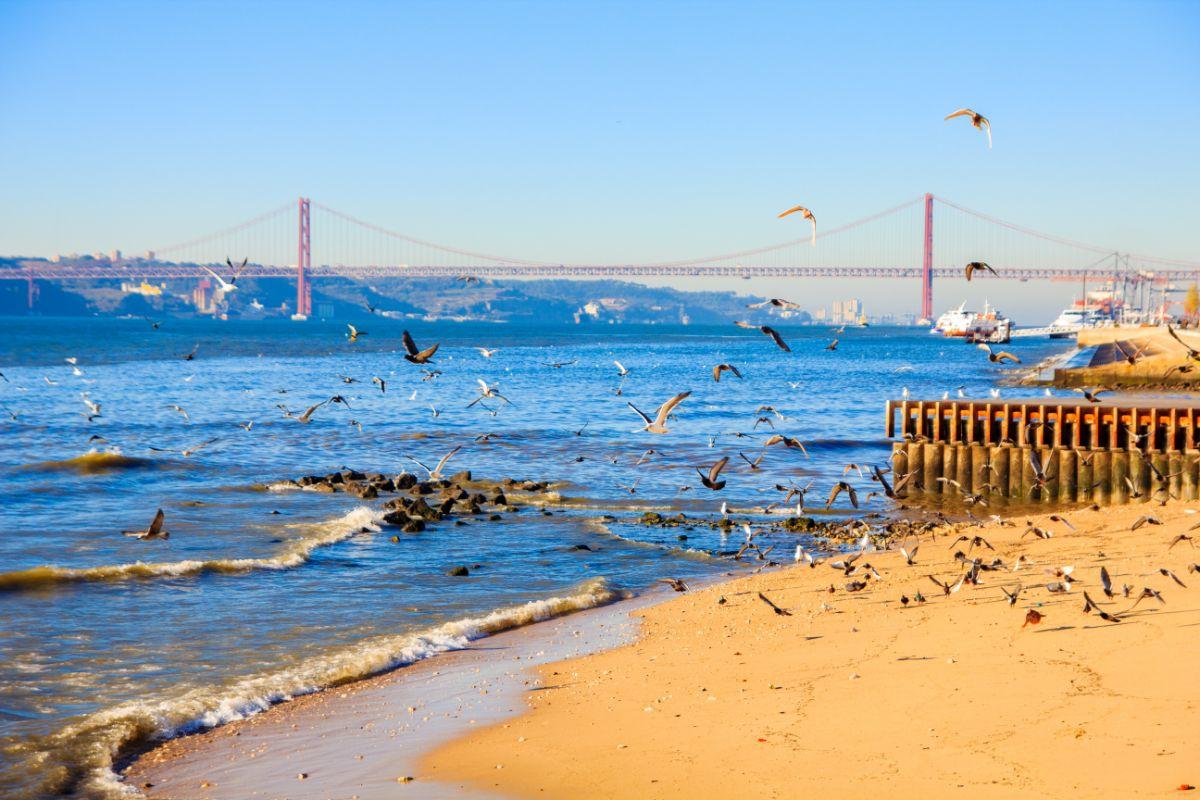
You can certainly see parts of Lisbon in a day. But you can't see everything. So to have a day to spend in Lisbon, you need to know what you want to see, wake up early and head to the attractions before the queues start to grow. To enjoy a little more of what Lisbon has to offer, a 3 or 4 day stay is ideal. This means you'll be able to visit most of Lisbon's famous sites and perhaps even take an excursion to Sintra or Cascais. If you have a lot of time on your hands, a week in Lisbon will allow you to see the big sights, take a day trip or two and enjoy a few experiences - cooking classes, street food tours, fado shows - for good measure.
Favourites
Remember we mentioned that Lisbon is built on seven hills? The fact that Lisbon is a hilly city adds another dimension to the city's beauty and charm, as these hills offer extraordinary views. These views, and the atmosphere they create, really do make Lisbon one of the best cities to visit in Portugal.
Our favourite viewpoint is at the top of Cristo Rei, overlooking Lisbon's red-roofed houses, the sea and the famous Vasco da Gama bridge. Another interesting viewpoint is São Jorge Castle, overlooking the old town of Alfama.
FAQ What to do in Lisbon
What to do in Lisbon with children
* Playgrounds are always popular with small children. Lisbon is no different. Playgrounds also give parents a chance to relax for a few minutes while the kids have fun. Playgrounds in Lisbon can be found everywhere, and some popular parks can be found at : Jardim Dom Luis, which is close to the shopping plaza on the Tagus. There is a small play area, benches and shady trees. There is a kiosk with tables and chairs where you can buy drinks and food. The Neptune children's park is located near the Lisbon Aquarium. When visiting Lisbon with young children, a park is an excellent choice. * Tuk Tuk Tour Lisbon and Portugal, in general, seem to be channeling their inner Asia. Lisbon Tuk Tuks seem to be in abundance in Portugal at the moment. This amazing Tuk Tuk tour takes in everything along the Tagus, from Trade Square to Augusta Street and everything in between, until it arrives at the foot of the Monument of the Discoveries in Belém. The Tuk Tuk was a novelty for the kids, not quite a motorbike, not quite a car, but definitely a lot of fun! If you want an easy way for kids to see Lisbon, this is definitely for you!
What to do in Lisbon in December
* Shop at Lisbon's Christmas markets It wouldn't be December in Europe without a few Christmas markets to shop at. There will be a few throughout the month; the two you can count on being open most of the time are the Rossio Christmas Market and the Praça do Município Christmas Market. Come and pick up gifts, souvenirs, Christmas food and entertainment for the kids! * Taste Portuguese delicacies in Lisbon in December Trust the Portuguese to save some of their best recipes just for the festive season. Every year in December, Portuguese households get out their holiday recipe books and everyone can indulge. One dish to look out for is rabanadas, a dish similar to French toast but with a Portuguese twist. Broas castelares are Portuguese Christmas cakes made with sweet potatoes. Also keep an eye out for filhós and sonhos. Especially if you have a sweet tooth. If you don't know where to try Portuguese Christmas treats this December, head for the Christmas markets or one of the city centre patisseries.
Are there beaches in Lisbon?
Situated on the coast of the Atlantic Ocean, Lisbon is blessed with a series of beautiful beaches, most of which are within easy reach of the Portuguese capital. The coast is served by an excellent rail service. Trains run regularly from Cais do Sodré station to the seaside resort of Cascais, 34 kilometres to the west, a journey of around 40 minutes. Several beaches are located close to the stations, making a day by the sea even more enticing.
How do I get from Lisbon to Sintra?
It's easy to get to Sintra from Lisbon. Trains run at least every 30 minutes on weekdays, and every 30 minutes at weekends, from Rossio station in Lisbon city centre. The journey takes 39 minutes and a return ticket costs around €4.30 (2020 fare). These are local commuter trains.
Porto or Lisbon?
Lisbon has more tourist attractions, sights and museums. While Porto has a few cathedrals and sights worth seeing (such as the Harry Potteresque bookshop), it's all about enjoying the city, strolling the streets and admiring the scenery.